
















There’s a small moment, right before the water boils, when you already know if a pasta is going to behave well. Everybody at Savorita knows that. Like most Italians, we had pasta for lunch at least twice a week during all our childhoods, and many of us now enjoy cooking it.
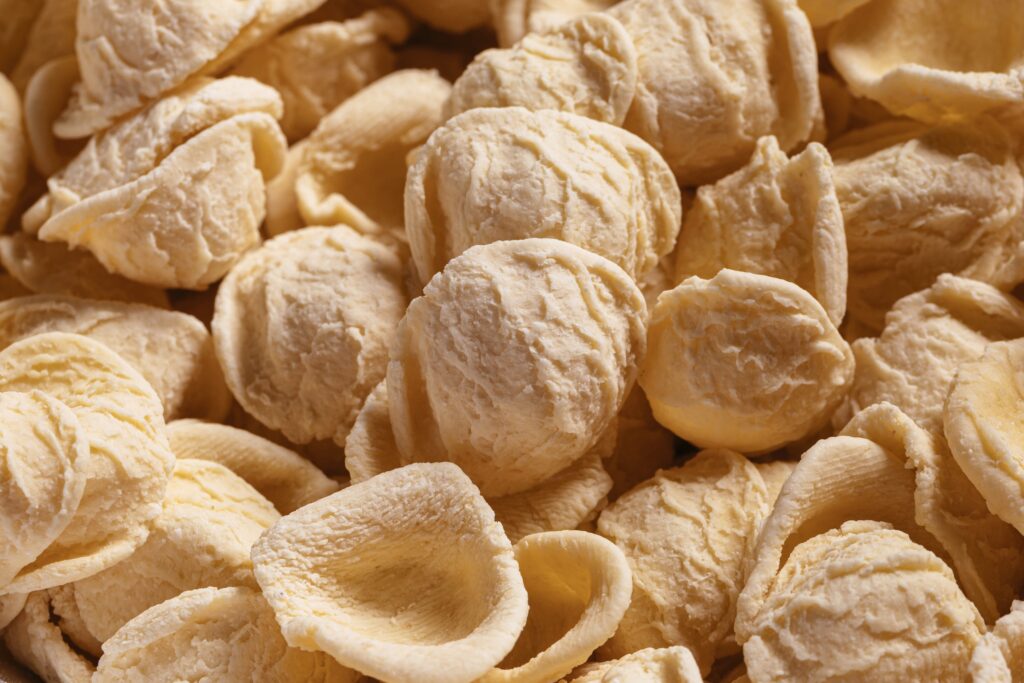
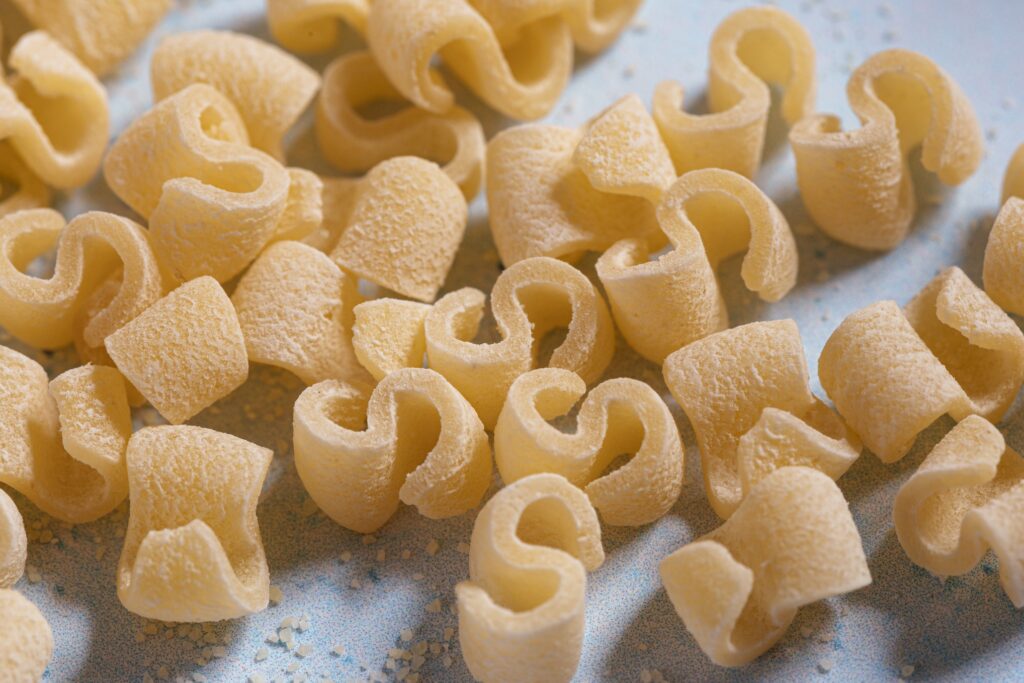
Let me just explain it to you: first you feel it. The texture is not perfectly smooth, but alive, slightly grainy, the kind of surface that seems ready to hold onto sauce. Then, you see it in the color: warm, natural, always different from the last time.
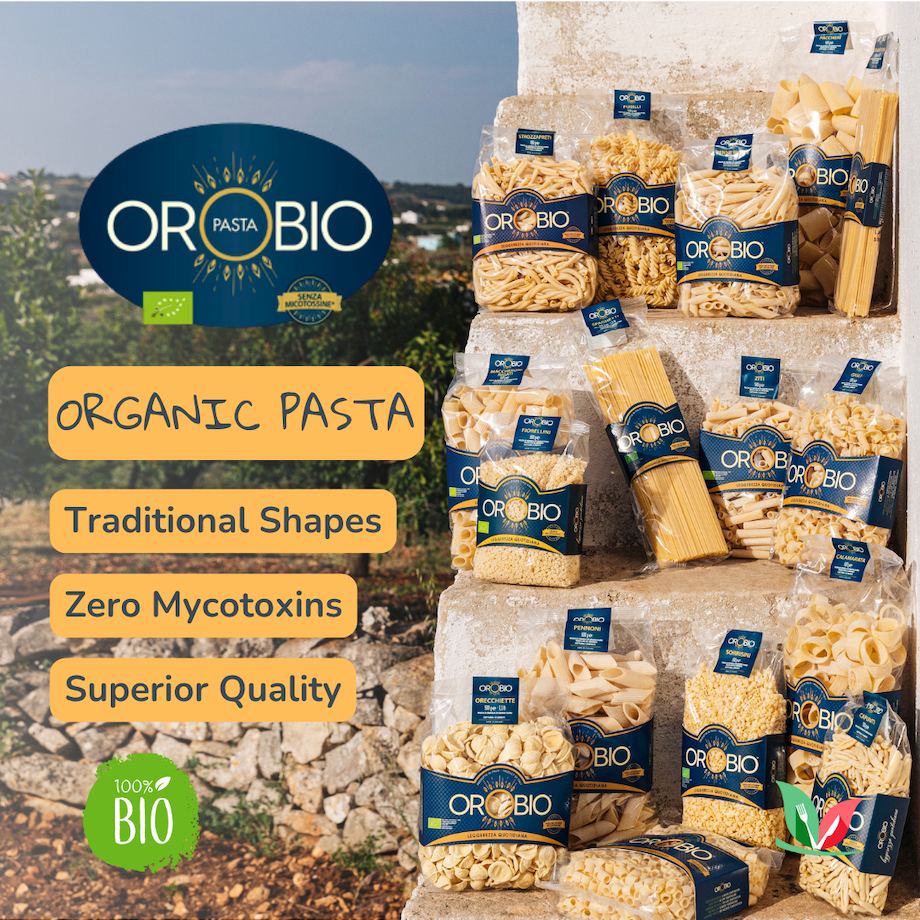
Pasta Orobio is that kind of pasta, and we are proud to introduce it to you.
Quality and Health
The story of Pasta Orobio begins in 2016, in Altamura, when agronomist Pietro Squicciarini opened the artisanal pasta workshop Fior di Campo.
From there, Pasta Orobio was born with a different ambition: unite the craft knowledge of Southern Italy with agronomic innovation, and make pasta not only good, but safe, verifiable, and made for everyday wellbeing.
For Pasta Orobio, “organic” is the starting point, not the finish line.
What makes this producer genuinely distinctive is a promise that is still rare in pasta: a pasta certified “without mycotoxins” from field to table, made from selected durum wheat semolina from Puglia and Basilicata, supported by rigorous analysis that the brand intentionally makes accessible.
If you’re reading this as a buyer, a chef, or simply someone who cares about what sits behind a daily staple, you can probably already feel why this matters. Pasta Orobio doesn’t ask you to trust a story. It asks you to trust a method.
And then it lets the pasta do the talking.
Altamura, an agronomist, and a decision that feels personal
Most pasta brands start from a recipe.
Pasta Orobio starts from a question: what is really inside the grain we eat every week?

That’s where the “agronomist detail” changes the tone of the whole project. Piero approached pasta like a food responsibility, something people consume often, sometimes daily, and therefore something that should be clean, controlled, and consistent. In short, making the first pasta certified “senza micotossine”, without mycotoxins, from field to table, built on the best semolina from Puglia and Basilicata.
That origin matters, but not because it’s romantic. It matters because it’s practical.
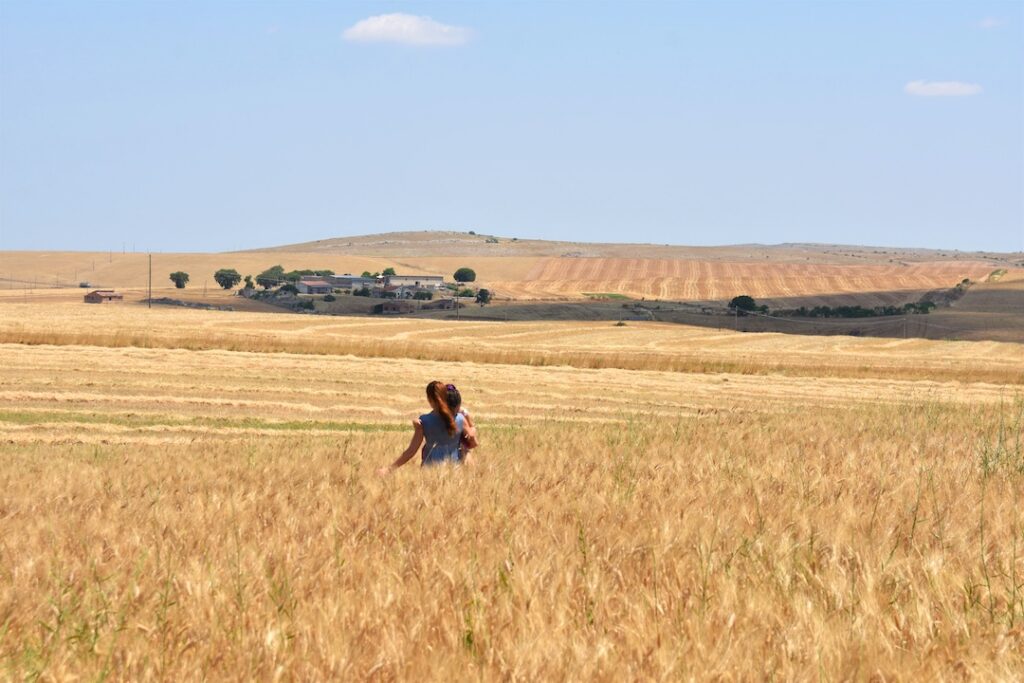
Puglia and Basilicata are among the Italian regions most naturally linked to durum wheat culture, and Pasta Orobio connects that heritage to modern expectations: not only taste and tradition, but food safety and transparency.
When we talked with Piero, it emerged clearly that their mission is framed in a way we rarely see in pasta: they talk about quality as a right, not a luxury, they describe their project as an act of care for health, pasta that is highly digestible and safe, without losing the soul of wheat and the knowledge of past generations.
The “no mycotoxins” promise: a modern idea of everyday trust
Pasta Orobio has a clear way of looking at “organic”. The brand builds something rarer and very current: a pasta designed to be trusted every day, not only admired occasionally.
At the center is a promise that feels both scientific and deeply human: pasta certified organic “without mycotoxins”, made with selected durum wheat semolina from Puglia and Basilicata.
What we appreciate in this approach is not the technical detail itself, but the intention behind it: to make a staple food feel clean, and reliable: something you can serve often, and eat often, with peace of mind.
This is where Pasta Orobio’s idea of quality becomes unusually inclusive. They know what pasta should be: pleasure, tradition, comfort. But they added a layer of care, care that is measurable, not just claimed.
For food stores and restaurants, this becomes a gift: a simple, confident story that customers understand immediately. It’s not about fear or complexity. It’s about a straightforward promise: organic craft pasta, made from carefully selected organic wheat, with a special focus on purity and safety.
And because the message is so clear, it travels well across languages, across markets and across customer profiles. Everyone understands what it means to choose a pasta that aims to combine taste and daily wellbeing, without asking anyone to compromise.
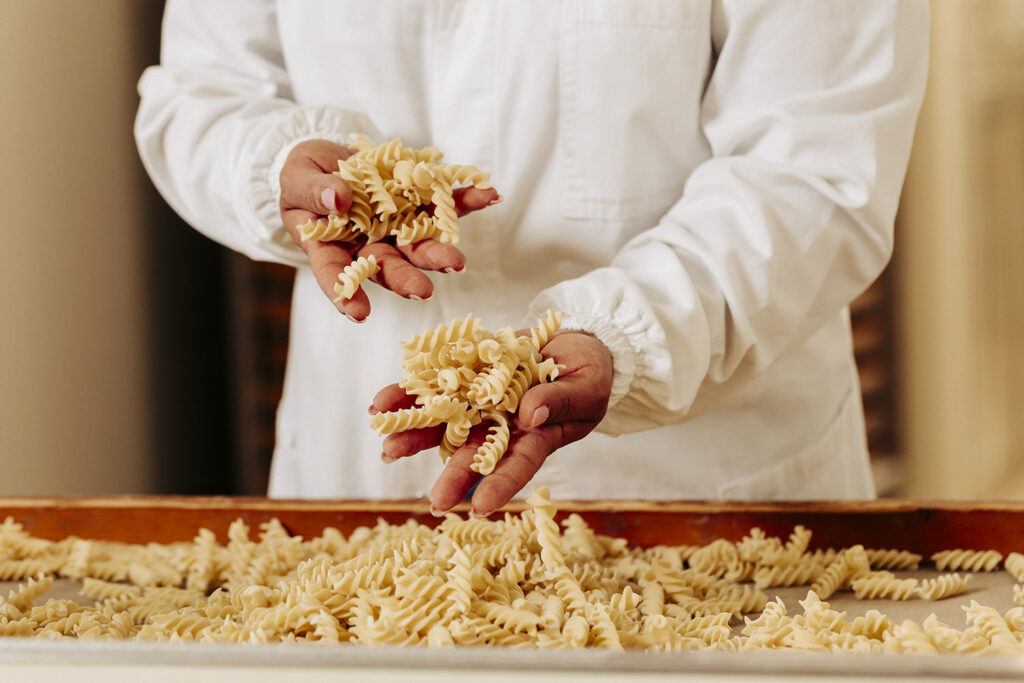
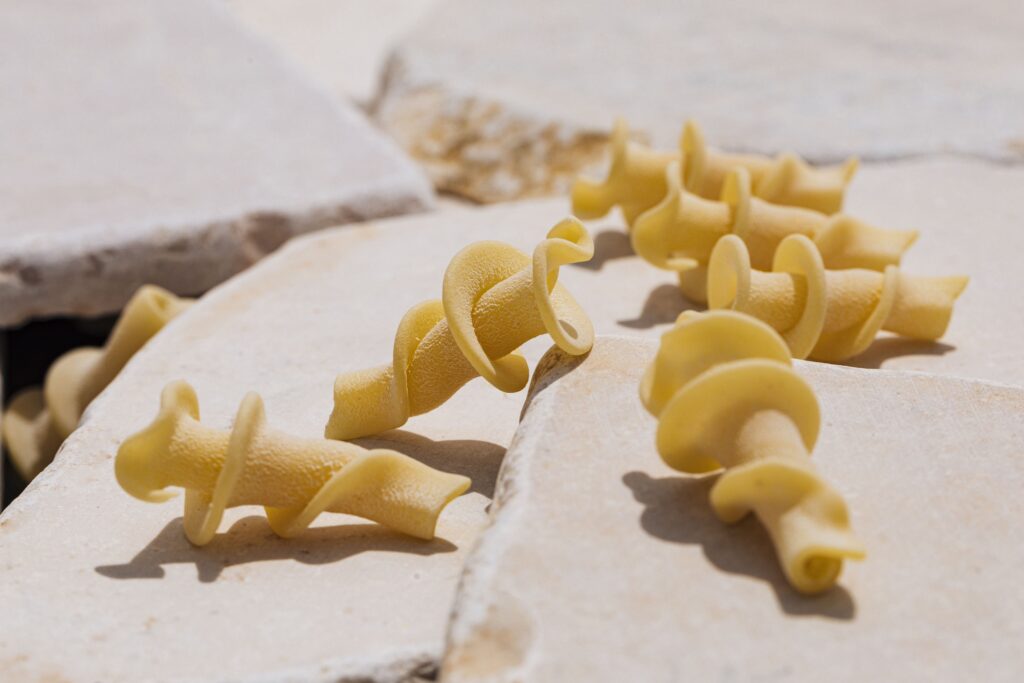
Craft you can taste: bronze drawing, slow drying, and a pasta built to be “al dente”
Pasta Orobio is a brand with a modern vision, but its pasta is made with a deeply traditional logic: let the process protect the wheat, not cover it.
That’s why their production choices are the classic ones that matter in the pot.
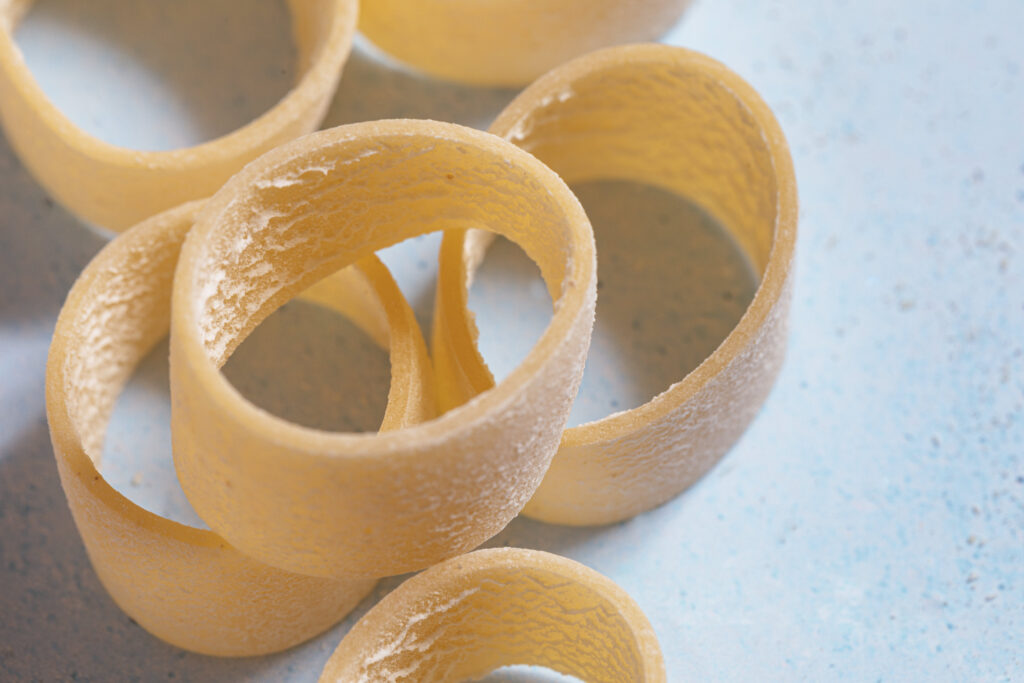
They use bronze drawing, which gives the pasta a naturally textured surface, slightly rough, never glossy.
It’s the kind of surface that doesn’t just “carry” sauce, but welcomes it.
Translating it from Italian kitchen slang: tomato clings, oil doesn’t slide away, ingredients stay where they should. In other words: the pasta helps the dish feel complete, without forcing you to change your recipe.
Then there is slow, low-temperature drying. This is one of those details that can sound technical until you taste the result. Done well, slow drying protects the character of the grain and supports structure. The pasta keeps its bite, stays “al dente”, and holds up well through the small real-life delays that happen in any kitchen: plating, serving, a minute too long in the colander.
You notice it in the first forkful, and then again the next time you cook it, when it behaves exactly the way you hoped it would.
A brand for every shelf and kitchen
Pasta Orobio is the brand people come back to, because it sits at a rare intersection: Southern Italian craft, organic wheat, and a safety promise built on analysis and proof.
If you’re curating a shelf or building a menu where “organic” is the starting point, Pasta Orobio is the kind of name that you want, first because it’s trustworthy, then because it’s simply good to eat.
Authentic pasta from Pasta Orobio